
“When little people are overwhelmed by big emotions, it’s our job to share our calm, not join their chaos.”
L.R. Knost
At the outset it is important to understand what happens in the body when we experience anxiety. In part one, we talked about how anxiety evolved to keep us safe. Part of that evolutionary mechanism is the activation of our sympathetic nervous system, commonly known as “fight, flight, or freeze”. Remember, the body makes no distinction in kind between seeing a predator and public speaking. Beyond the very noticeable physical reaction we experience (heartbeat, blood flow, breathing), there are also changes to brain function that are useful to understand. The part of our brain responsible for our fear response (limbic system and the brain stem), is closer to the core of our brains, whereas the part responsible for higher order thinking (the cortex) is on the outside of our brain. When the fear response is triggered, blood flows away from the cortex and into our muscles, effectively cutting off access to our higher order thinking, and importantly, our ability to use our coping strategies.
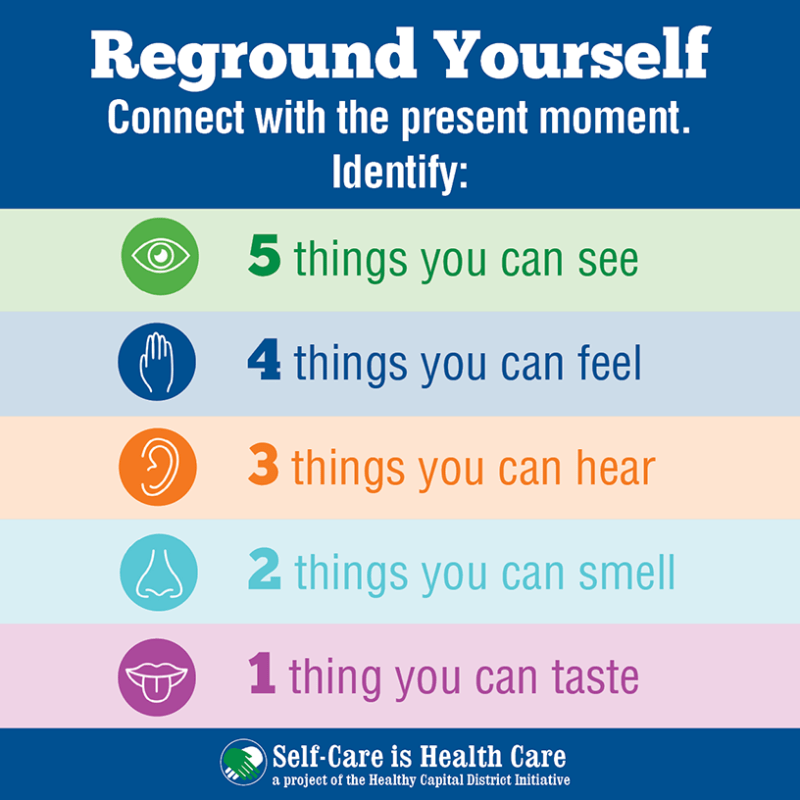
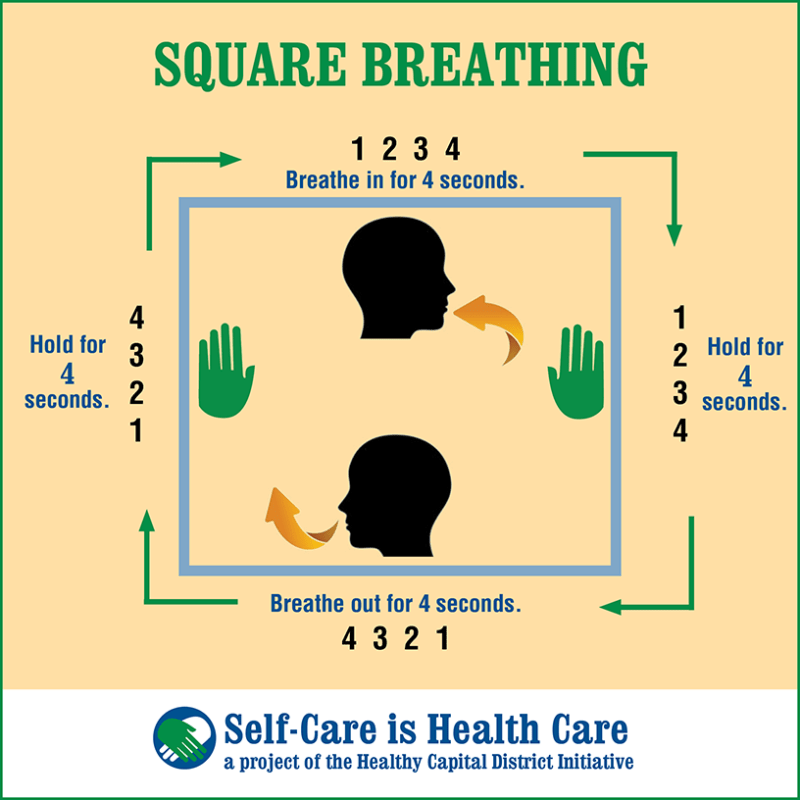
This is important to understand because we need to get blood back into the cortex in order to begin the coping process. Attempts to employ coping strategies while our sympathetic nervous system is activated will most likely fail because we lack the ability to think rationally. Consequently, when someone’s anxiety is activated, we need to begin by telling the body that it is safe. The best way to do this is through the process of grounding. Most often, grounding involves bringing your conscious awareness into your body and the present moment. Breathing, stretching, exercise, and mindfulness exercises like body scans and meditation are all great ways to ground yourself. Two popular grounding tools are Box Breathing and the 54321 exercise (diagrams below), but a google search will bring you to a variety of exercises that work. Once someone is grounded, we can begin to use some strategies to improve the larger issue.
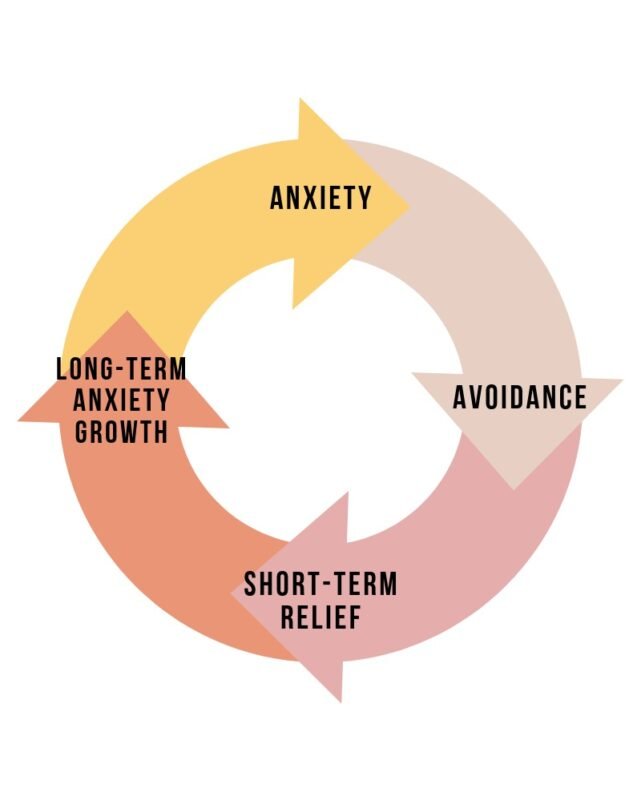
A useful thing to keep in mind at the outset is that anxiety and avoidance are best friends. Avoiding the source of the anxiety reinforces the idea that running away from anything that makes you anxious is the best strategy, which only increases the anxiety response to that stimulus. In a world full of anxiety provoking stimuli, this is not a sustainable strategy. Related to this is the parental urge to protect your children. Completely sheltering kids from discomfort and fear not only reinforces the idea that the world is a scary place to be avoided, but also reduces their belief in their ability to face fear and challenges. The goal isn’t to eliminate the anxiety, but to help the person manage it.
Things to avoid:
- Dismissing experience
- “Don’t worry about it – it will be fine”
- Making promises
- Leading questions
- “Is it the big test you’re worried about?”
- Fixing their problem
- Choreographing/coordinating/controlling the situation
- Responding with high emotion
Ways to Help:
- Don’t avoid things that make the child anxious
- Express positive & realistic expectations
- Give notice when expectations change
- Talk to them about their anxiety & ask questions
- One of the ways we learn to manage anxiety is by talking to safe people in safe environments
- Corregulation, regulating our emotions in tandem with others, is also a great way to get grounded
- Validate/Normalize
- “It sounds like you’re having a rough day”
- “That sounds nerve-racking”
- Be there when your child asks for help
- Rehearse recognizing basic safety when feeling anxious
- “I am not in danger”
- Model healthy ways of handling anxiety
Encourage Change:
- Make lists
- Break up tasks or goals into smaller, more manageable parts
- Limit options
- Support but do not take over
The more someone can face the things that make them anxious and be witness to their own success, the more prepared they will feel to face their fears in the future.
David
Simply Counselling Services